How AI is Changing Marketing Analytics
Natural language queries, anomaly detection, and automated insights are transforming how marketers work with data.
MetricNexus Team

The way marketers interact with data is changing. Instead of building complex queries or navigating through dashboards, you can now just ask questions.
By 2026, an estimated 40% of analytics queries will be made using natural language, with many bypassing dashboards entirely. Meanwhile, marketing leaders are dealing with 230% more data compared to 2020, and more than half say they cannot make sense of it all. The solution is not more dashboards. It is smarter ways to query your data.
The Old Way
Getting a simple answer used to require multiple steps:
- Log into Google Ads
- Navigate to the right report
- Set the date range
- Export to Excel
- Repeat for Facebook
- Manually combine the data
- Finally get your answer
This process could take 30 minutes or more, and you'd have to do it again tomorrow.
The New Way
Now you can just ask:
"Hey Claude, how did my campaigns perform last week compared to the week before?"
That's it. One question, one answer.
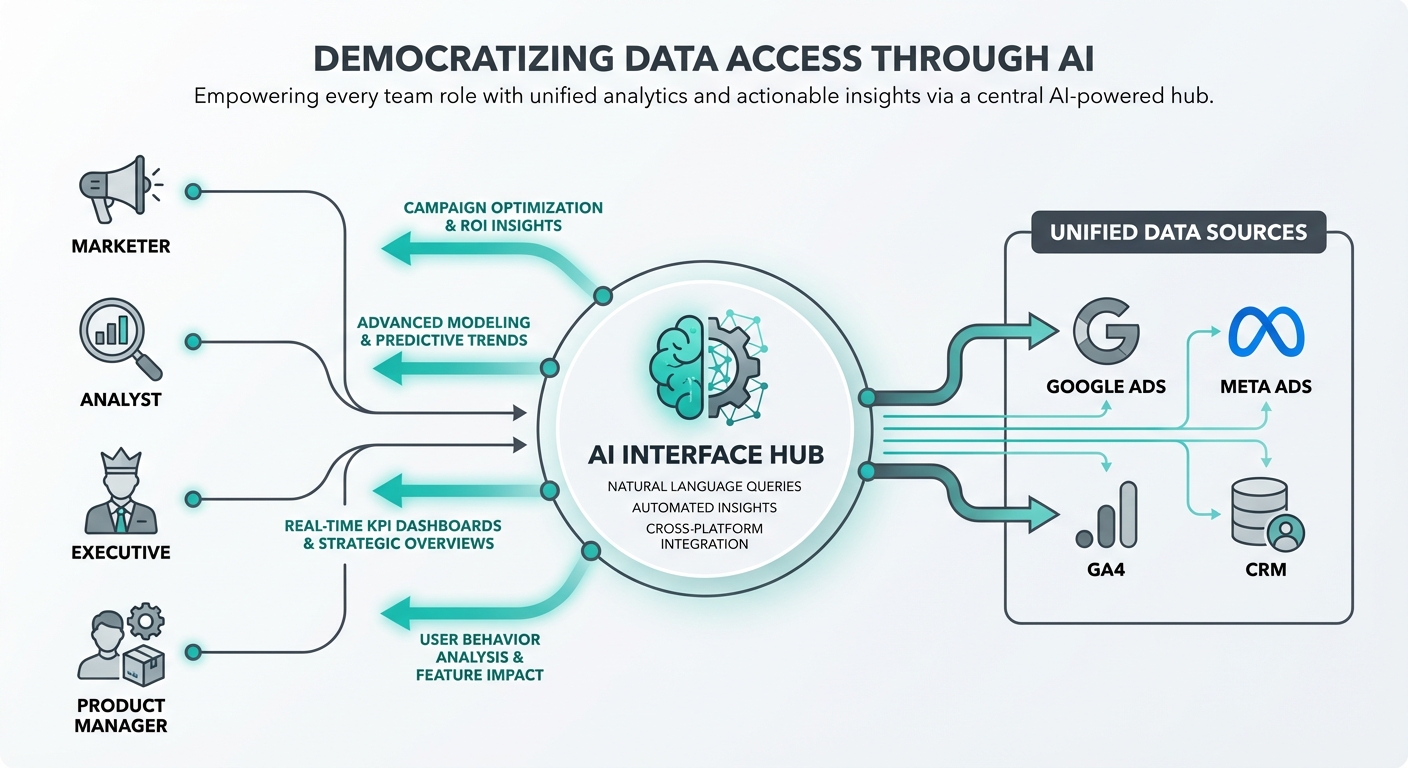 Different team roles accessing marketing data through a central AI interface connected to unified data sources
What This Enables
Faster Decisions
When getting an answer takes seconds instead of minutes, you make more decisions. You experiment more. You catch problems faster.
Consider this scenario: your CPA suddenly increased by 20%. In the old world, you might not notice for days. With AI-native analytics, you get an alert immediately.
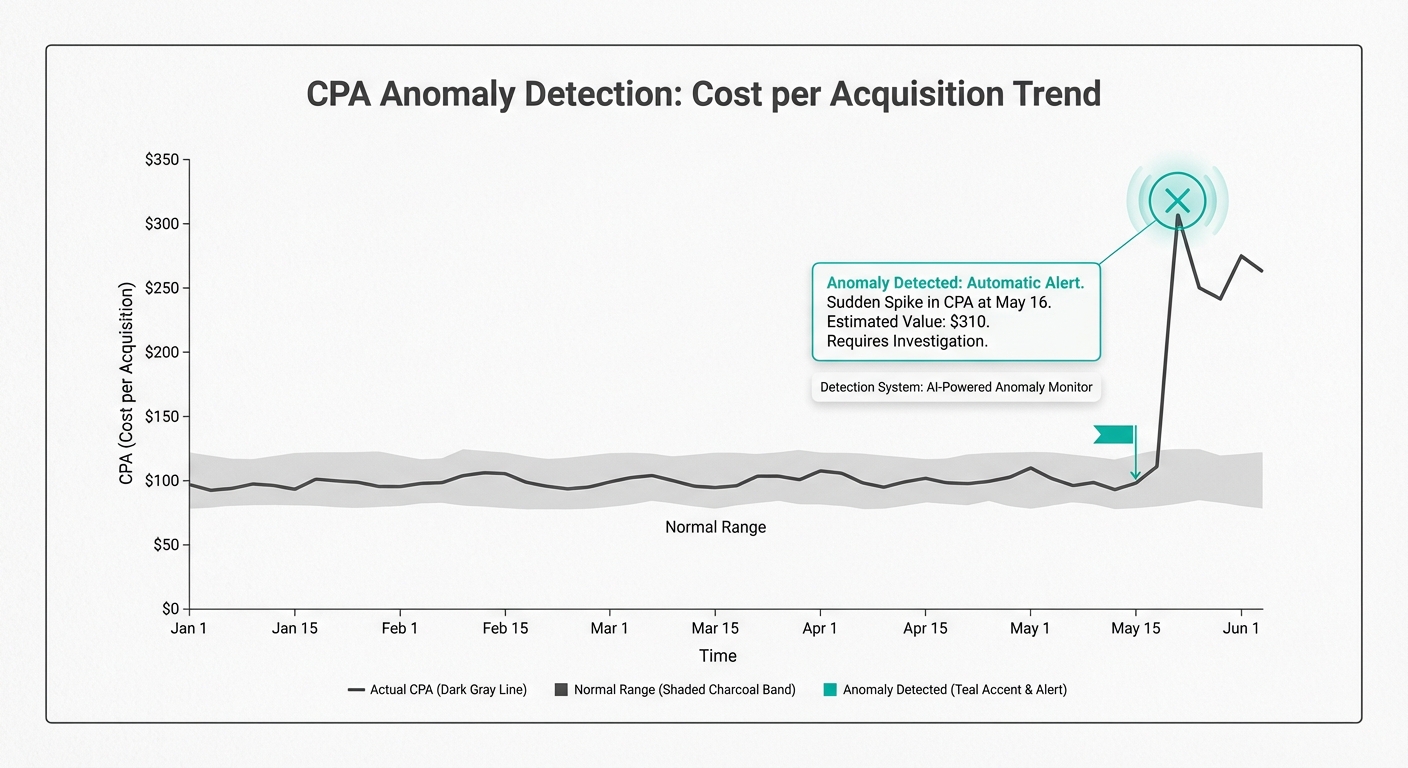 Anomaly detection chart showing a CPA spike being automatically detected and flagged with an alert
Code block (typescript)// Example anomaly detection output
{
  metric: "cpa",
  change: "+23%",
  period: "yesterday vs 7-day average",
  campaign: "Summer Sale - Display",
  possibleCause: "Ad group 'Mobile Users' paused"
}
Democratized Access
Not everyone on the team knows SQL or can navigate complex dashboards. Natural language queries mean everyone can get the data they need.
- Marketing Manager: "What's our ROAS by channel this month?"
- Content Writer: "Which blog posts drove the most conversions?"
- Executive: "How are we tracking against our Q1 spend target?"
All valid questions. All answered in seconds.
The key difference from traditional BI tools: you can ask follow-up questions. "Why did ROAS drop last Tuesday?" followed by "Which ad groups were affected?" The AI maintains context across the conversation, letting you drill deeper without starting over.
Pattern Recognition
AI can spot patterns humans miss. A 15% increase in CPA might go unnoticed in a sea of numbers, but AI can flag it immediately and suggest potential causes.
This is not a future concept. Mixpanel Spark, Ask Amplitude, and Google's Conversational Analytics in Looker all offer natural language querying today. The pattern is clear: conversational interfaces are becoming the standard way to interact with analytics data.
The Technology Behind It
MCP (Model Context Protocol) is what makes this possible. It gives AI assistants like Claude direct access to your marketing data. This is not about generating text from training data. It is about AI actually querying your real numbers and providing answers based on what happened yesterday, not what the model learned months ago.
How MCP Works
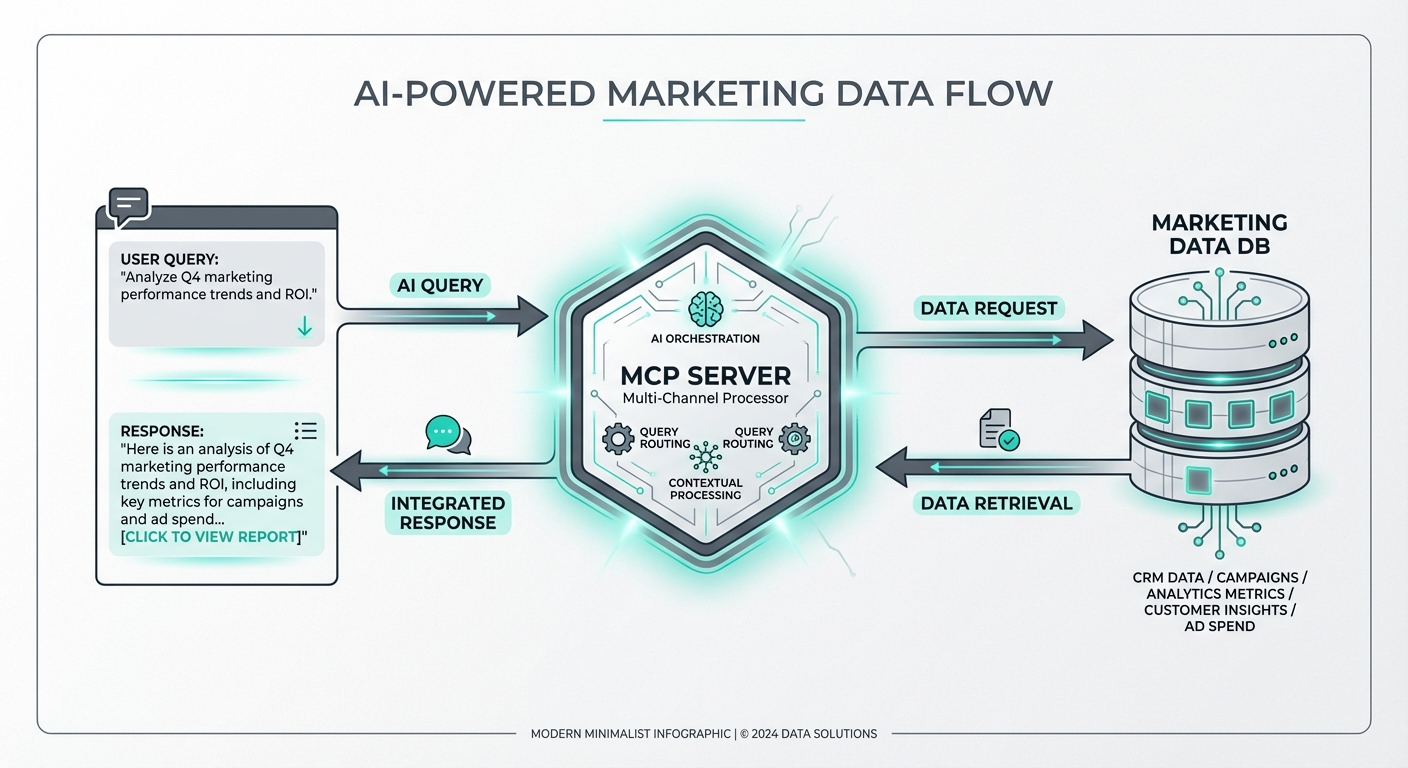 Data flow diagram showing how AI queries pass through an MCP server to access marketing data and return results
- You ask Claude a question
- Claude calls the MetricNexus MCP server
- MCP server queries your actual marketing data
- Results are returned to Claude
- Claude explains what the data means
No exports. No copy-pasting. No context limits.
Your data stays in your infrastructure. The MCP server handles authentication and query execution, so Claude never sees raw credentials or has direct database access. This architecture means you get the benefits of AI-powered analysis without compromising on data governance.
Getting Started with AI Analytics
Ready to try AI-native analytics? Here's how to get started:
- Sign up for MetricNexus - Start your free trial
- Connect your ad accounts - Google Ads, Facebook, GA4
- Get your MCP credentials - In Settings → API
- Add to Claude Desktop - Follow our setup guide
- Start asking questions
The future of marketing analytics is conversational. Are you ready?
Related Posts

Introducing MetricNexus: Marketing Data Made Simple
We're launching MetricNexus to help small marketing teams understand their data without needing a data engineer.
Google Ads vs Facebook Ads: A Data-Driven Comparison
We analyzed thousands of SMB campaigns to understand where each platform performs best.
Ready to see your marketing data?
Start your free trial today. See your data in 5 minutes.
Start Free Trial