Google Ads vs Facebook Ads: A Data-Driven Comparison
We analyzed thousands of SMB campaigns to understand where each platform performs best.
MetricNexus Team
Should you spend more on Google or Facebook? The answer depends on your business, but data can help guide the decision.
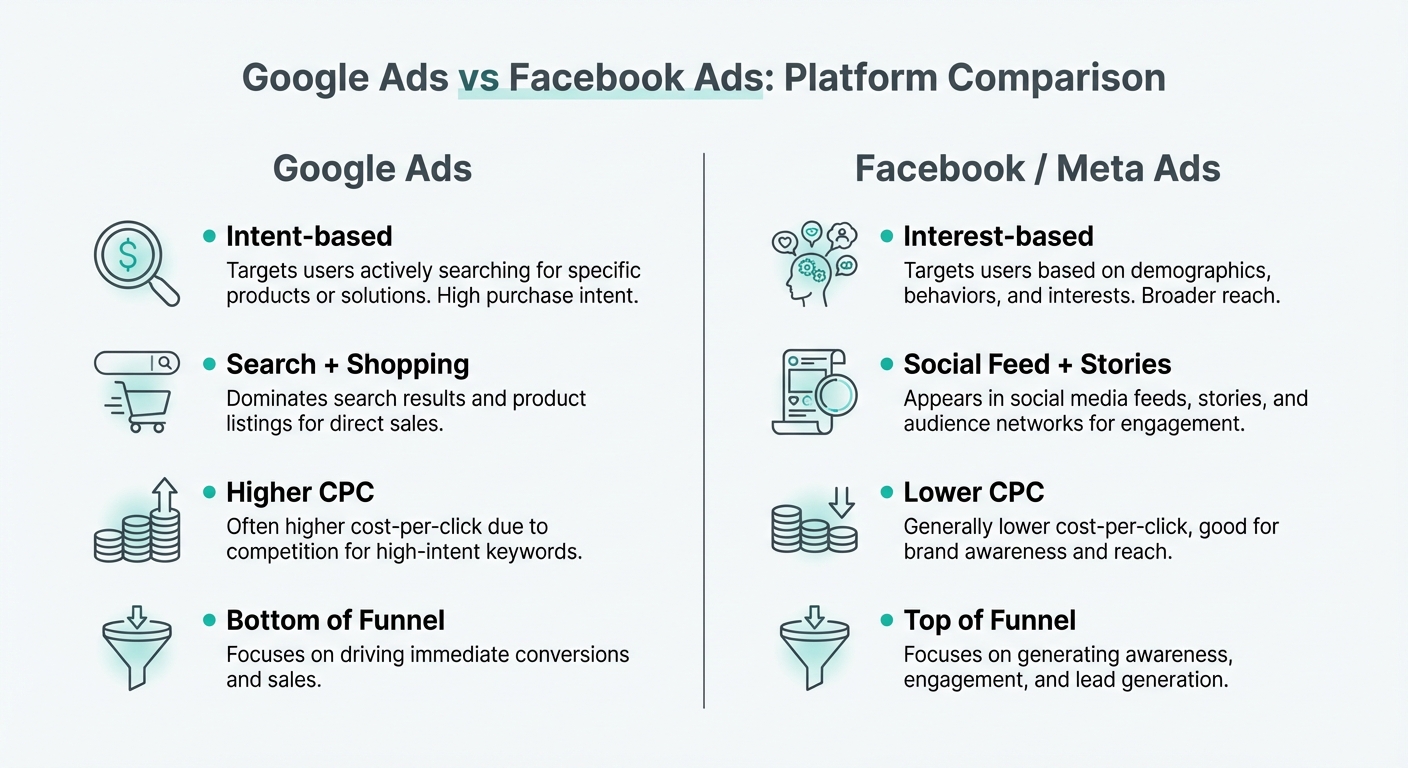 Google Ads vs Facebook Ads platform comparison diagram
Intent vs Discovery
The fundamental difference between these platforms comes down to user intent:
- Google Ads: People are searching for something. They have intent.
- Facebook Ads: People are scrolling. You're interrupting with something interesting.
Neither is better - they serve different purposes in your marketing funnel.
Platform Reach
Before diving into strategy, consider the scale of each platform:
- Google: Processes 3.5 billion search queries daily - that's 40,000 searches every second
- Meta (Facebook/Instagram): Over 3 billion monthly active users across platforms
Both platforms dominate digital advertising, together controlling over 50% of global digital ad spend.
When Google Ads Wins
Google Ads typically performs better when:
- People know they need your product - They're actively searching
- Your product solves an immediate problem - "plumber near me", "best CRM software"
- You're competing in a category with search volume - Check Google Keyword Planner
Example: B2B SaaS
For a B2B SaaS product, Google Ads often delivers lower CPA because:
Code block (markdown)Search intent: "project management software for small teams"
└── User already knows they need this
└── Ready to evaluate options
└── Higher likelihood of conversion
When Facebook Ads Wins
Facebook Ads typically performs better when:
- You're building awareness for a new category - People don't know to search for you yet
- Your product is visually compelling - Fashion, food, home decor
- You're targeting specific demographics or interests - Facebook's targeting is unmatched
Example: D2C E-commerce
For a new D2C brand, Facebook often wins because:
Code block (markdown)Discovery: "Oh, that product looks cool"
└── User wasn't searching for this
└── Visual creative drives interest
└── Impulse purchase potential
Cost Comparison (2026 Benchmarks)
Understanding typical costs helps set realistic expectations:
| Metric | Google Ads | Facebook Ads |
|---|---|---|
| Average CPC | $2.70 - $3.10 | $0.62 - $0.72 |
| Cost Per Lead | ~$70 | ~$28 |
| Conversion Rate | 6-7% | 8.78% |
The takeaway: Google clicks cost more but come from users with high intent. Facebook clicks are cheaper but require more nurturing. Don't compare CPCs directly - compare cost per conversion for your specific business.
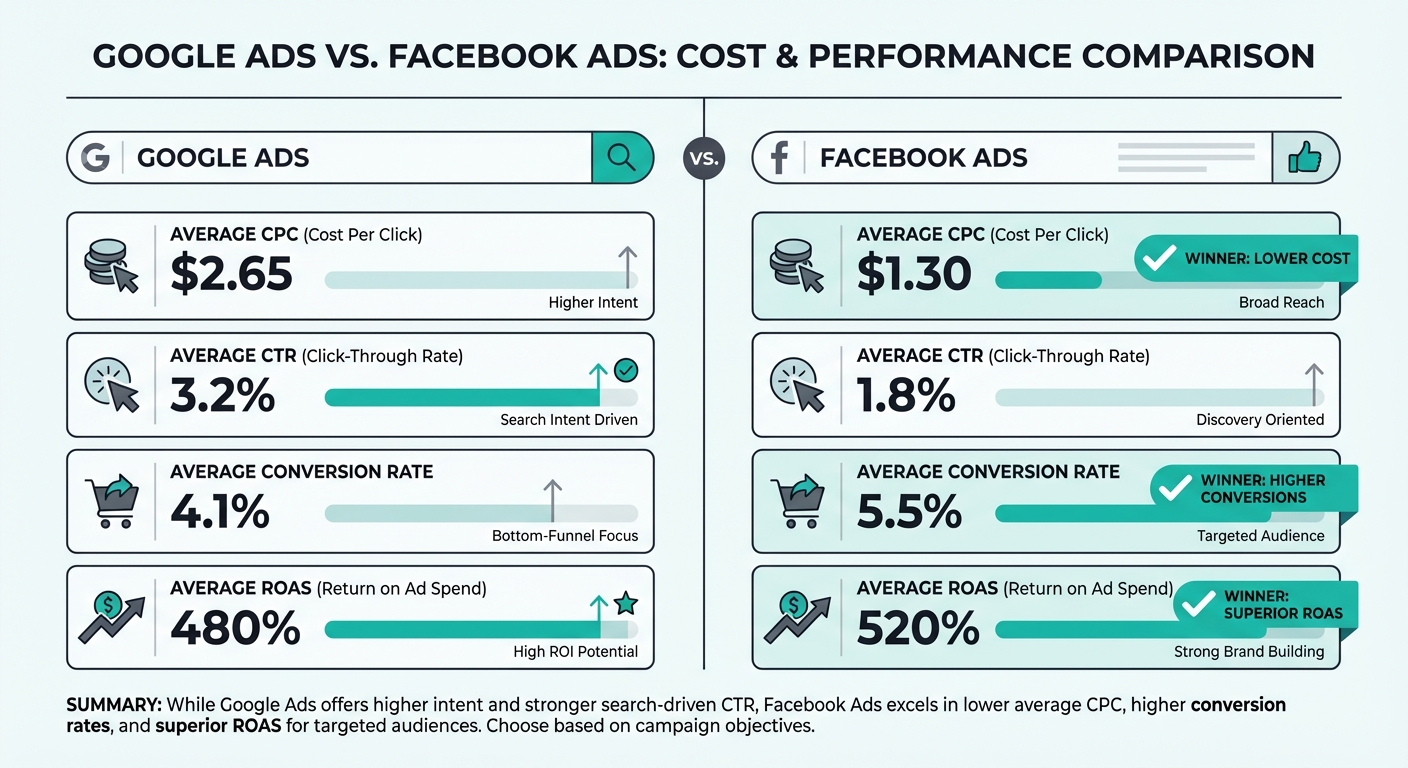 Google Ads vs Facebook Ads cost and performance metrics
The Best Approach: Both
Most successful SMBs use both platforms strategically:
| Funnel Stage | Platform | Goal |
|---|---|---|
| Awareness | Introduce your brand | |
| Consideration | Facebook + Google | Nurture interest |
| Conversion | Capture high-intent searches | |
| Retention | Retargeting |
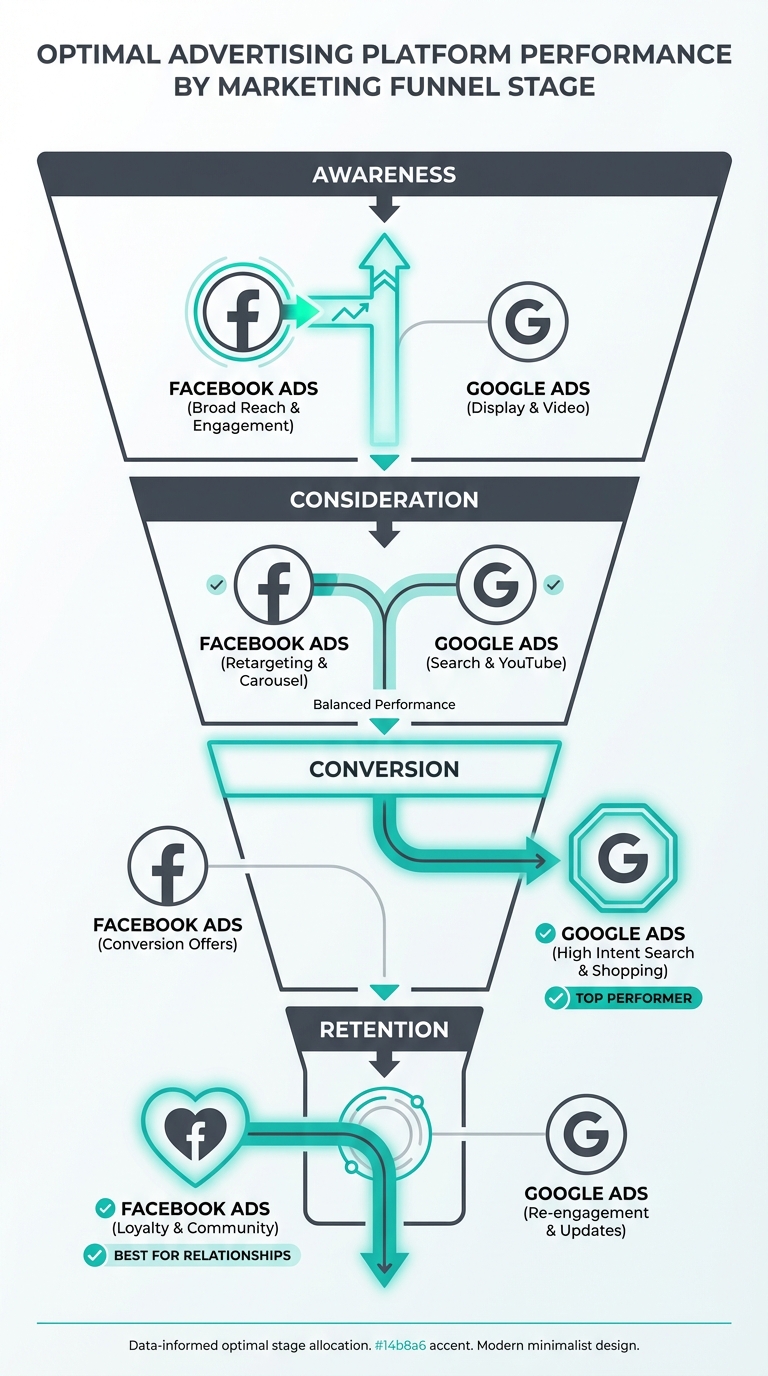 Marketing funnel showing which platform works best at each stage
Budget Allocation
A common starting split for e-commerce:
- 60% Facebook - Prospecting and awareness
- 30% Google - Brand and high-intent keywords
- 10% Retargeting - Both platforms
For B2B SaaS, flip it:
- 60% Google - High-intent searches
- 30% Facebook - Retargeting and lookalikes
- 10% LinkedIn - Professional targeting
Getting Started
If you're testing both platforms for the first time:
- Test budget: $500-$1,000 per channel minimum
- Timeline: Expect early signals in 1-2 weeks, actionable trends in 30-60 days
- Key metric: Focus on cost per conversion, not CPC
Track Everything in One Place
The key to optimizing across platforms is having all your data in one place. When you can see Google and Facebook performance side by side, you can:
- Compare ROAS by channel and campaign
- Identify overlap in conversions
- Optimize budget allocation based on real data
- Spot trends across platforms
This is exactly why we built MetricNexus. Connect both platforms, see unified dashboards, and ask questions like:
"Which platform has the best ROAS this month?"
"How does my Google brand campaign compare to Facebook retargeting?"
"Where should I shift $500 to improve overall performance?"
Key Takeaways
- Google Ads = Intent capture. Best for known problems.
- Facebook Ads = Discovery. Best for visual products and new categories.
- Use both strategically across your funnel.
- Track everything in one place to optimize.
Related Posts

Ready to see your marketing data?
Start your free trial today. See your data in 5 minutes.
Start Free Trial